
Performance Intelligence — Digital Twin
Each ceramic module hosts sensor cavities — soil moisture, PM 2.5, microclimate temperature — that aggregate across the façade into a real-time data mesh, feeding a digital twin and enabling ML-driven HVAC optimisation and adaptive irrigation response.
Research Question
Can a building façade act simultaneously as ecological interface, passive climate regulator, and real-time performance sensor — without adding structural load or operational complexity?
TPMS Module System — Grasshopper
TPMS geometry maximises surface area, minimises material volume, and self-organises into structurally efficient lattices — hosting aeroponic roots, managing drainage, and regulating airflow within a single ceramic element.
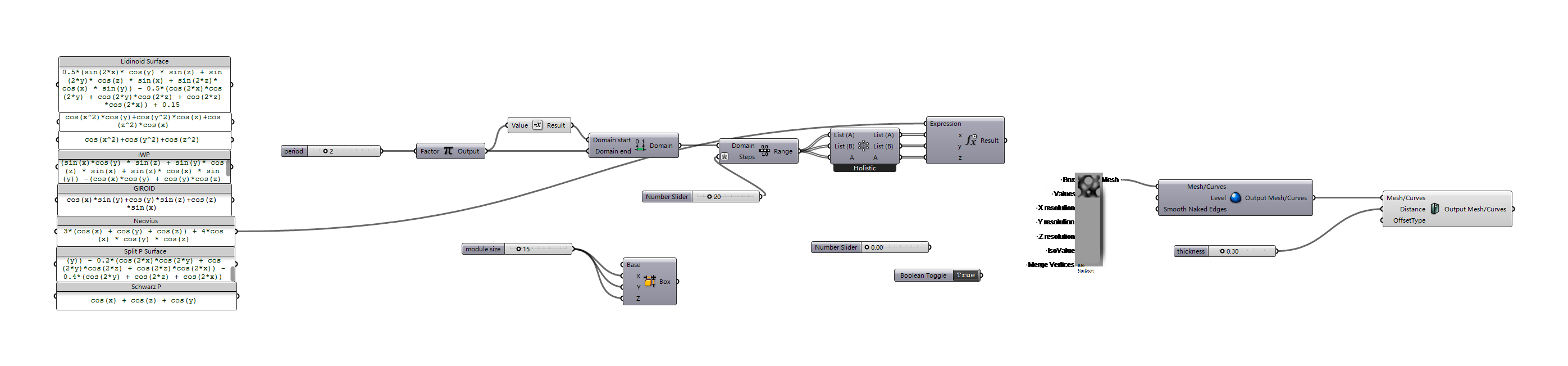
Grasshopper canvas — TPMS equation-driven parametric workflow
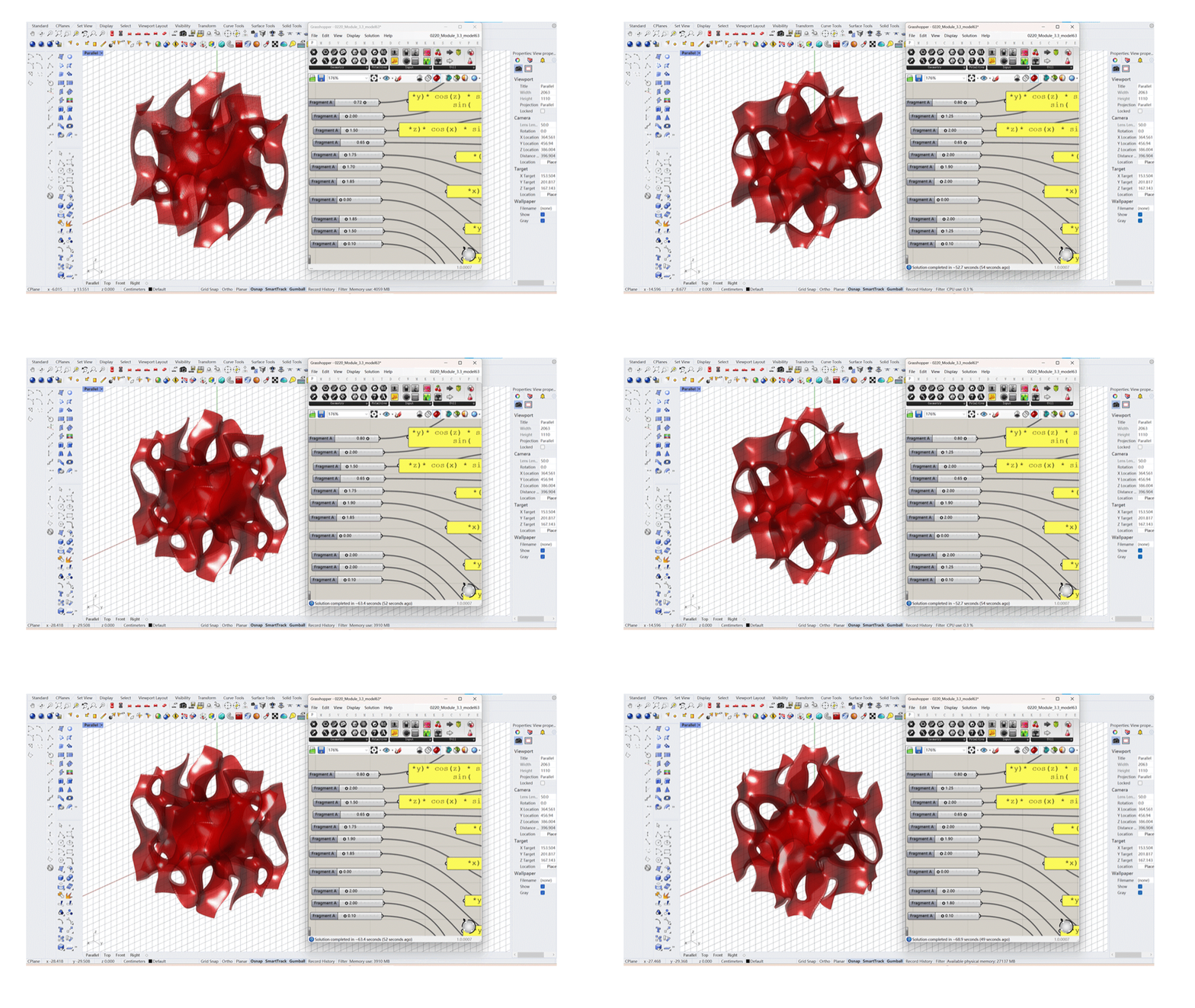
Real-time variation — wall thickness & porosity modulation across TPMS families
Physical Prototyping — Slip Casting
Three TPMS families cast in slip: Schwartz P (planar, high density), Schwartz D (curved cavities, larger root volume), Gyroid (saddle surface, maximum internal complexity). Each tests mold segmentation, wall uniformity, and cavity geometry under ceramic shrinkage.

Schwartz P — planar array, high panel density

Schwartz D — curved cavities, larger root volume

Gyroid — saddle surface, maximum channel complexity
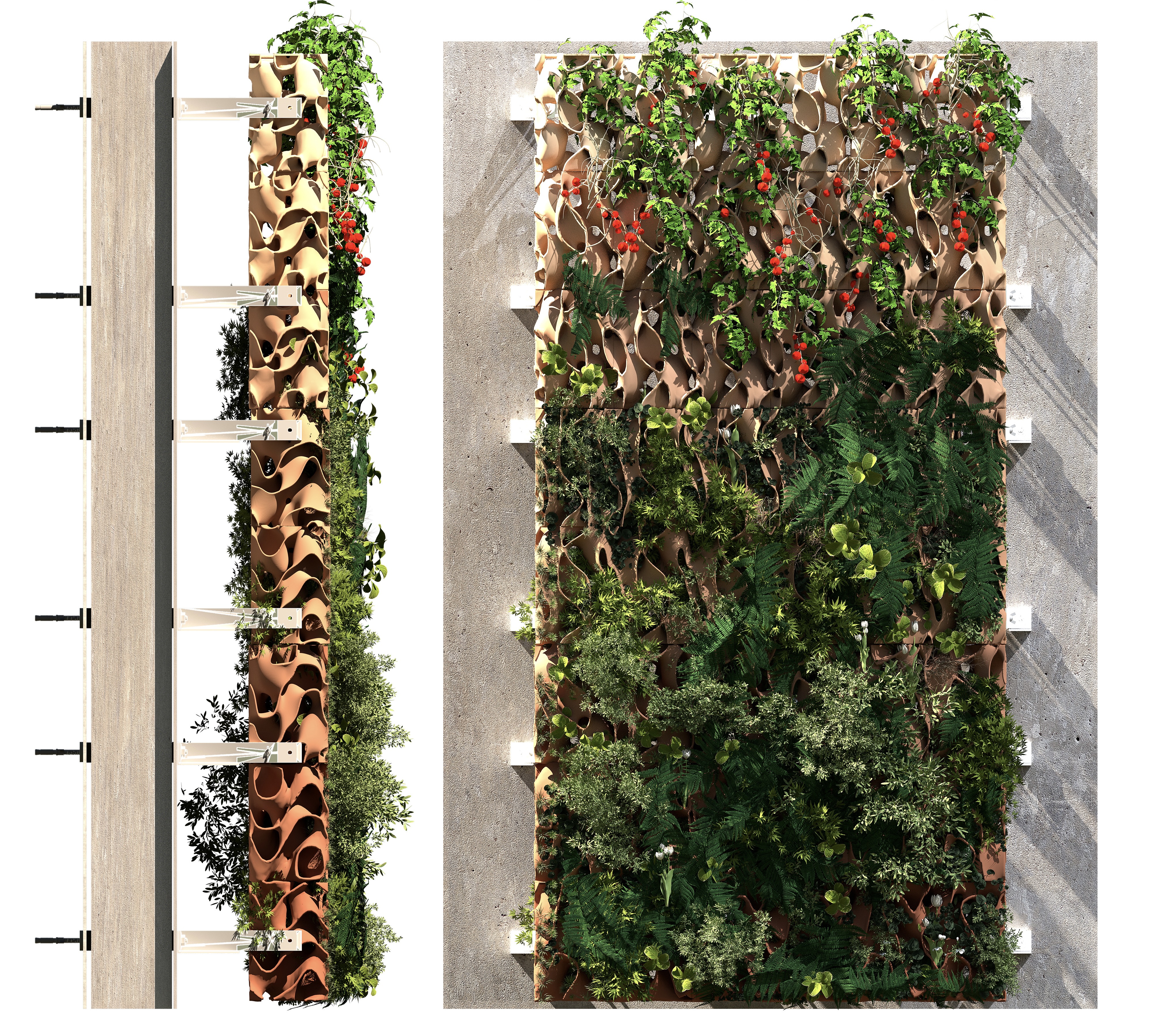
Façade render — module aggregation at panel scale
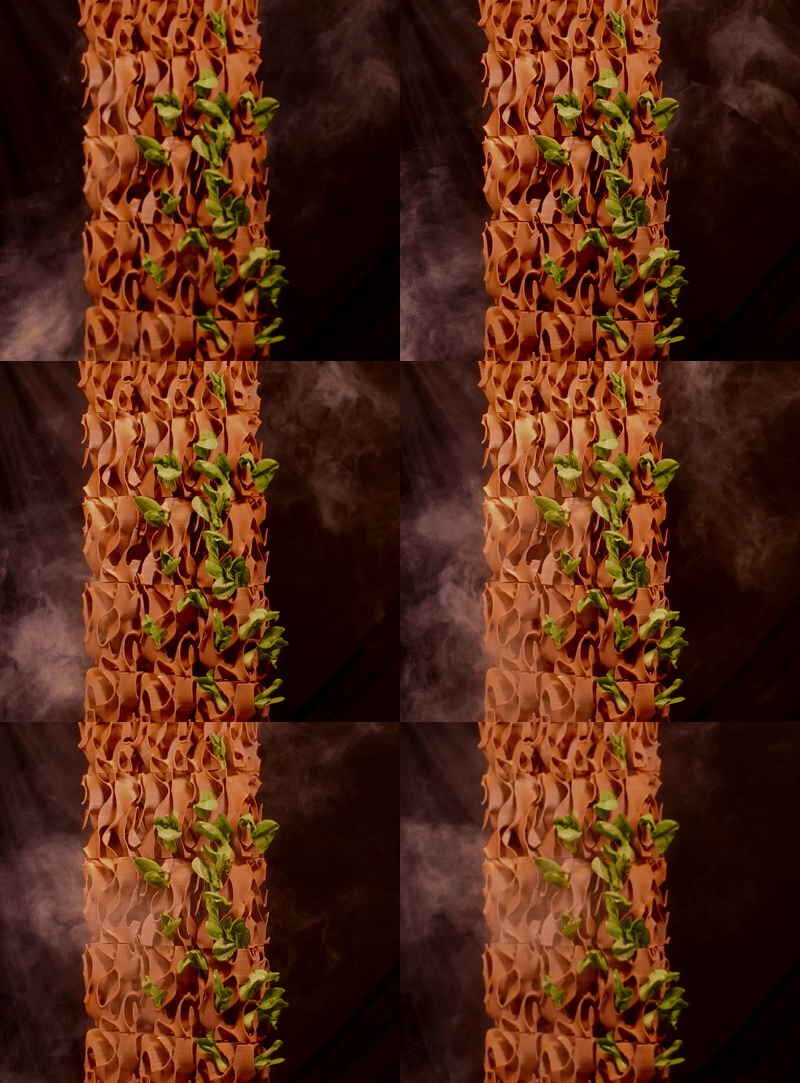
Prototype sequence — slip casting to assembled module
Site Intelligence — UAE
Abu Dhabi: 44 °C peak temperatures drive HVAC to 70% of peak electricity load · >80% soil salinisation rules out in-ground agriculture · near-zero urban canopy eliminates passive cooling. The map layers ESA WorldCover 2021 with a derived deployment suitability index.
Tags
Paper
Read Full Paper ↗